on craft [ or how i set my type by hand, but also use ai ] or a mindful reaction to 'AI is NOT better than you'
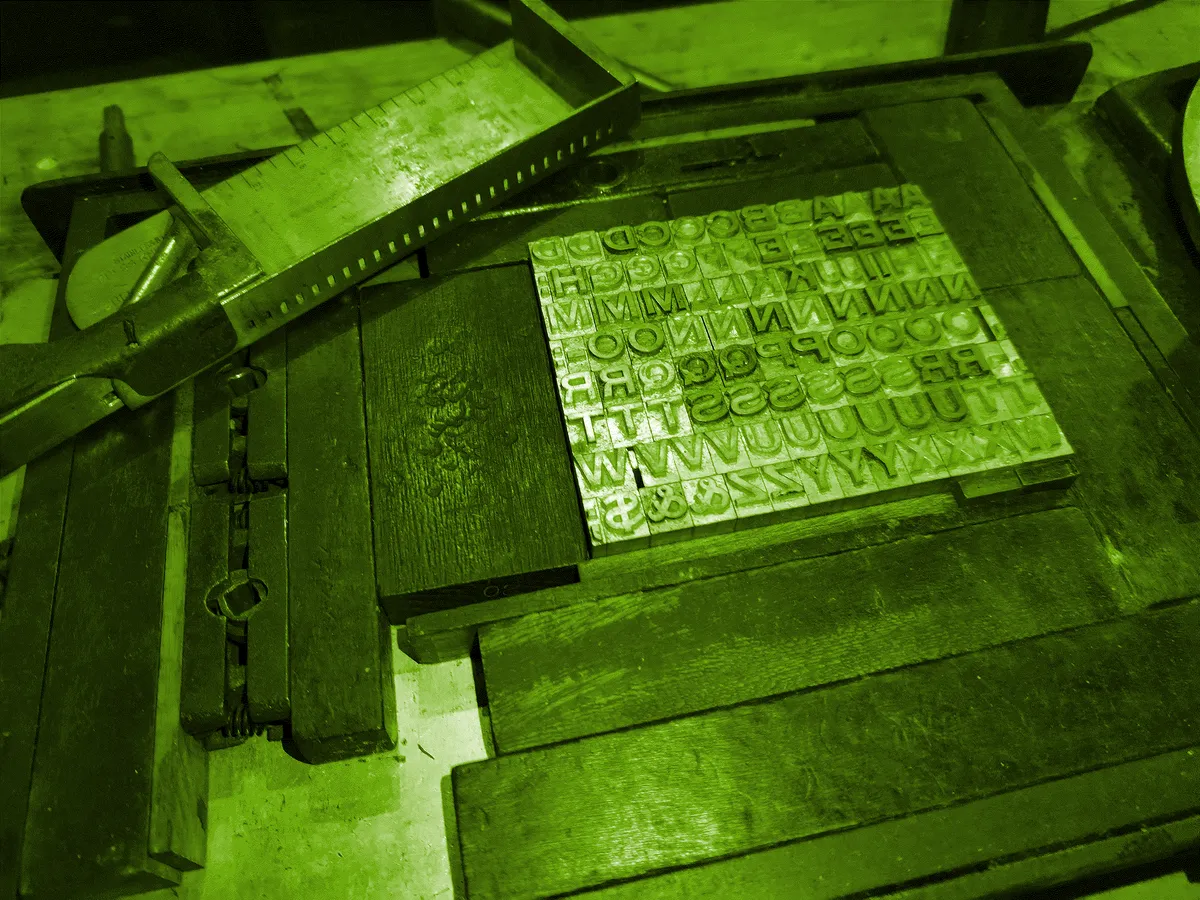
i set type by hand. i have been a letterpress printer for a long time. sometimes i hand-carve my own letters, fonts, and images. i do it because i care about material truth, how words live on paper, how ink sets, and how spacing changes meaning.
i am not upset that people use digital fonts and typography (i do too 🙃). digital type is a tool. it is fast, accessible, and powerful. letterpress is also a tool, but it makes you slow down, be mindful, and commit.
that is how i think about ai. i use ai here and there, especially my local model for coding assistance. ai is a tool. not a soulful substitute for judgment. if it helps you draft, iterate, translate, or explore variants, all is fine. but the craft, taste, ethics, responsibility, and final decisions, still belong to the human.
ai sits in a strange category. it is powerful, but it is also electricity-hungry, easy to misuse, appropriative, and sometimes ethically obtuse. the question is not whether we disregard the tool or not. it is here! the question is whether we use it with restraint, transparency, and purpose, and whether we keep human accountability at the centre.
we need to ask: as ai finds its footing, without romanticising the innovation while its makers offload the fallout, how do we pressure these gargantuan companies to be accountable for the environmental and social harm they have caused and externalised? not by simply avoiding or boycotting the technology. to even ask this question, we actually need to be involved and try to understand the complex cost-benefit(s) of this technological behemoth. at this point, all our hands are dirty with complicity.
see, as print shifted to screens and digital/mechanised means of production, livelihoods disappeared, yet the work persisted, not for economic remuneration, but for the stubborn joy of craft.
interestingly, for those of us who have persisted stubbornly with our craft, we have seen innovation in letterpress through digitally made polymer plates, laser-cut wood type, cnc-routed forms, photopolymer and 3d-printed components, and hybrid workflows that start on a screen and end under pressure.
this evolution, and the democratisation of the craft through internet forums, open tutorials, and social media, is what technological advance looks like when younger generations adapt to their moment and bring others along with them while exploring a hands-on craft. instead of lamenting the loss of craft, we should revive it inside today’s digital culture(s), keep the standards high, share what we know, and make room for new hands and new tools without surrendering the values that make the work worth doing while promoting hands-on crafting and work.
i love the concept of the handmade web, but most of it is not handmade in any literal sense, beyond the hands on a keyboard and the decisions behind the code. the phrase is a misnomer.
still, the ethics are generally pointing in a good direction. small, personal, slower, less extractive, more legible, and more intentional. where it goes off the rails is when “handmade” turns into moral posturing, purity tests, or a performance of virtue that ignores the material reality of the internet and access to specialised (often obtuse) knowledge.
not everything made (handmade or not) is worth making or beautiful. william morris in his 'on art and socialism'↗ remains a useful north star here, even if his tone can a little sarcastic and blunt:
nothing should be made by man’s labour which is not worth making, or which must be made by labour degrading to the makers. nothing useless can be truly beautiful. if a chap can't compose an epic poem while he's weaving tapestry, he had better shut up, he'll never do any good at all.
i do not take that last line as a literal instruction or a utilitarian value judgement so much as a sarcastically driven provocation. the point i keep is this: make things worth making, and do not build them on degrading work. in that sense, “handmade” is not a claim about purity, it is a commitment to agency. let's be honest there is plenty of physical and even handmade slop out there, just as there is ai slop, so let's not add to any of it: we need to make and build with care and intention, credit sources and inspiration, make things free and open, keep things repairable and iterative, choose lightness and beauty wherever we can, and stay honest to our craft.
📝 while writing this log, which is a thought dump, honestly due, at least partly, to ginzo's post, AI is NOT better than you ↗, and through quoting william morris, i thought to myself: what would morris think of ai? i searched my question, and found a wonderful article by socialist architect cristina monteiro, 'Artificial intelligence and crafts: what would William Morris do?'↗. monteiro writes:
is Morris’s premise of a ruralist, post-industrial utopia something to aspire to? It is not an anti-mechanical or anti-tech utopia; machines were allowed to do the more degrading jobs previously done by humanity (in a parallel to some emerging uses of AI). Morris believed that, in the right hands, mechanisation and technology could liberate people from onerous and unpleasant work, freeing them to work fewer hours making crafted beautiful things [...] For now, I feel that Morris would be looking at AI through the lenses of both beauty and politics, and would tell us to disrupt the monopolisation of this new human resource to ensure it brings egalitarianism and planetary stewardship.
i think i agree with her. more free time, means we can make more beautiful things ... i like that. and it is obvious we are in sync regarding the need to ensure ai brings egalitarianism and planetary stewardship to the forefront.